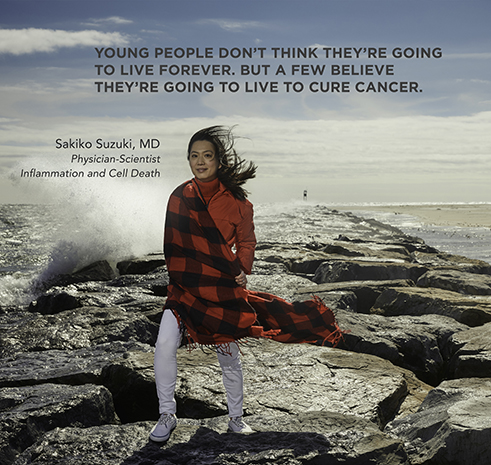
Damon Runyon identifies today’s most brilliant early career scientists and funds their innovative cancer research.
- Today’s Promising Areas of Cancer Research
- What is Cancer?
- A Broken Pipeline?
A Generation of Science at Risk
- ARISE Report
Early Career Scientists and High-Risk, High Reward Research - American Academy of Arts and Sciences
- Why We’re Losing the War on Cancer (And How To Win It)
Clifton Leaf - Fortune Magazine
2010 New Discoveries and Honors in Cancer Research
2010 | 2009 | 2008 | 2007 | 2006 | 2005
Members of the Damon Runyon scientific circle regularly publish findings on the latest cancer research and are frequently recognized for their contributions to the fight against cancer. Below, you will find new discoveries in cancer research and the most recent honors bestowed upon Damon Runyon Cancer Research Foundation awardees, alumni and friends.
August 24, 2010 > Combined therapies block brain tumor recurrence
Alonzo H. Ross, PhD (Damon Runyon Fellow ‘77-‘78) of the University of Massachusetts Medical School, Worcester, discovered that combining chemotherapy (temozolomide, TMZ) with a targeted therapy that blocks Notch signaling (γ-secretase inhibitor, GSI) blocks glioblastoma brain tumor recurrence in mice. In patients, these tumors are typically treated with surgery, radiation and TMZ, but these therapies ultimately fail due to tumor recurrence. GSIs are thought to block the cancer stem cells that resist chemotherapy/radiation and allow tumor recurrence. The researchers hope to ultimately translate these findings into the clinic. This study was published in the journal Cancer Research.
August 17, 2010 > New understanding of lung tumor resistance to Tarceva
Raffaella Sordella, PhD (Island Outreach Foundation Innovator ‘10-‘12) of Cold Spring Harbor Laboratory, Cold Spring Harbor, reported the discovery of a subpopulation of cells in non-small cell lung cancer (NSCLC) tumors that are intrinsically resistant to the targeted therapy erlotinib/Tarceva. These cells have features suggestive of a fate change termed epithelial-to-mesenchymal transition (EMT), and the researchers showed that these features are dependent on signaling by TGF-β and secretion of a factor called IL-6. Both TGF-β and IL-6 trigger inflammation. Interestingly, this study suggests that inflammation (e.g., in the tumor microenvironment) can reduce the tumor response to Tarceva; this represents an important new understanding of how tumor cells develop resistance. These findings were published in the journal Proceedings of the National Academy of Sciences.
August 12, 2010 > Novel findings about non-coding lincRNAs
John L. Rinn, PhD (Damon Runyon-Rachleff Innovator ‘09-‘11, Damon Runyon Fellow ‘05-‘07) of Harvard Medical School and the Broad Institute, Boston, Laura D. Attardi, PhD (Damon Runyon Scholar ‘02-‘04) of Stanford University, Stanford, and colleagues, discovered that one particular non-coding RNA, lincRNA-p21, acts as a repressor of p53-dependent gene expression and apoptosis (cell death). p53 is the most commonly-mutated gene in human cancers. These findings were published in the journal Cell. In a separate study, Howard Y. Chang, MD, PhD (Damon Runyon Scholar ‘06-‘08, former Fellowship Sponsor) and colleagues at Stanford University, Stanford, reported that lincRNAs may function by serving as scaffolds to bring together select enzymes that regulate the expression of target genes by modifying histones. This report was published in the journal Science.
August 4, 2010 > Molecular diagnostic technology using single cells
Hong Wu, MD, PhD (Damon Runyon Fellow ‘92-‘95, Former Sponsor) and a team of researchers at the University of California, Los Angeles, have developed a new technology that can measure signaling pathway levels in a single cell from tissues, including brain tumors. The new technology, microfluidic image cytometry (MIC), combines microfluidics and microscopy-based cell imaging. These molecular “fingerprints” are a new advance in diagnostics that could ultimately help physicians predict patient prognosis and guide personalized treatment. This study was published in the journal Cancer Research.
June 25, 2010 > Virus plus genetic mutation promotes Crohn’s disease
Ken Cadwell, PhD (Lallage Feazel Wall Fellow ‘08-‘11) and colleagues at Washington University, St. Louis, reported that the combination of a genetic mutation in Atg16L1 plus a specific viral infection induces Crohn’s disease, an inflammatory disease of the gut. The mutation alone is not sufficient to promote the disease. In addition, their research suggests that the genetic and viral combination harms the gut microbial community. Treatment with an antibiotic clears out the gut microbes and eliminates disease symptoms in mice. This study indicates that viruses may play an important role in disease onset. These findings were published in the journal Cell.
June 17, 2010 > Former Fellows Named Pew Scholars
The following Former Fellows are four of the 21 early career scientists named 2010 Pew Scholars in the Biomedical Sciences. The Pew Charitable Trusts grants Scholars $240,000 over four years for this prestigious award, which helps support their work in areas ranging from cancer to Alzheimer’s to Autism.
David A. Guertin, PhD (Fellow ‘03-‘06) University of Massachusetts Medical School, Worcester, Massachusetts
Valerie Horsley, PhD (Fellow ‘04-‘07) Yale University, New Haven, Connecticut
Rajat Rohatgi, MD, PhD (Fellow ‘06-‘07) Stanford University, Stanford, California
Susan R. Schwab, PhD (Fellow ‘04-‘06) New York University, New York, New York
June 15, 2010 > Pathways identified in metastatic lung cancer
William Y. Kim, MD (Damon Runyon-Merck Clinical Investigator ‘09-‘12) of the University of North Carolina, Chapel Hill, and colleagues reported that the SRC, PI3K and MEK1/2 kinase signaling pathways act together in metastatic lung tumors that have deletions of the tumor suppressor LKB1. These findings suggest that unique combinatorial therapies may be successful for treatment of lung cancers. The research was published in the journal Cancer Cell.
June 7, 2010 > HPV status predicts throat cancer survival
Maura L. Gillison, MD, PhD (Damon Runyon-Lilly Clinical Investigator ‘00-‘05) of Ohio State University Comprehensive Cancer Center, Columbus, and colleagues reported that the presence of human papilloma virus (HPV) in tumors is the best predictor of response to therapy and survival for patients with oropharyngeal cancer (cancer of the back of the mouth). Those with HPV-positive tumors had better 3-year rates of overall survival (82.4% vs. 57.1% for patients with HPV-negative tumors). Christine H. Chung, MD (Damon Runyon-Lilly Clinical Investigator ‘05-‘10) of Vanderbilt University School of Medicine, Nashville, was a collaborator on this study. These findings were reported at the American Society of Clinical Oncology conference and in the New England Journal of Medicine.
June 5, 2010 > Successful treatment for metastatic melanoma
Jedd D. Wolchok, MD, PhD (Damon Runyon-Lilly Clinical Investigator ‘03-‘08) of Memorial Sloan-Kettering Cancer Center, New York, and colleagues reported the first treatment to improve overall survival in patients with metastatic melanoma. In a phase III clinical study, patients were treated with ipilimumab, which blocks a protein called CTLA-4 to promote an antitumor T-cell immune response. Overall survival was improved by 34.4% (10.1 months vs. 6.4 months). These findings were reported at the American Society of Clinical Oncology conference and in the New England Journal of Medicine.
June 3, 2010 > 2010 Kavli Prizes
James E. Rothman, PhD (Damon Runyon Fellow ‘76) of Yale University, New Haven, was named a recipient of the 2010 Kavli Prize in Neuroscience “for discovering the molecular basis of neurotransmitter release.” His pioneering work has focused on how cells take up nutrients, move substances within their interior, and release hormones, growth factors and other factors to their environment. He continues to study the basic mechanisms responsible for intracellular transport and secretion of neurotransmitters and other proteins.
Nadrian C. Seeman, PhD (Damon Runyon Fellow ‘72-‘73) of New York University, New York, was awarded the 2010 Kavli Prize in Nanoscience “for the development of unprecedented methods to control matter on the nanoscale.” He invented structural DNA nanotechnology when he realised the building blocks of DNA could be harnessed to create the raw materials for nanoscale circuits, sensors and medical devices.
May 21, 2010 > Silica cages used for improved cancer drug delivery
Jun Liu, PhD (Damon Runyon Fellow ‘91-‘93) and colleagues at Pacific Northwest National Laboratory, Richland, reported that anti-cancer drugs (antibodies) can be packaged into silica particles for more efficient delivery to the tumor. The particles were injected directly into a mouse melanoma, which resulted in much greater and prolonged inhibition of tumor growth than the antibody given systemically. These studies present a promising new approach for local targeted delivery of drugs to tumors. The findings were published in the Journal of the American Chemical Society.
May 4, 2010 > Novel understanding of cell invasion process
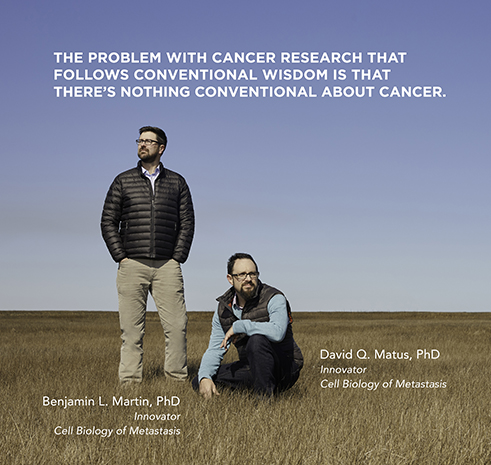
David Q. Matus, PhD (Damon Runyon Fellow ‘07-‘10) and colleagues at Duke University, Durham, identified novel genes involved in cell invasion of basement membranes, a process essential during development, immune surveillance, and metastasis. Basement membranes form the lining of blood vessels and organs in the body. The researchers found that turning off two specific genes, cct-5 and lit-1, in metastatic carcinoma cells reduced the cells’ ability to invade these basement membranes. The results, published in the journal Science Signaling, may provide new therapeutic targets to control cell invasion and metastasis in cancer.
April 27, 2010 > New Members of National Academy of Sciences Elected
Election to the National Academy of Sciences is one of the highest honors that can be earned by a U.S. scientist. In recognition of their distinguished and continuing achievements in original biomedical research, 13 members of the Damon Runyon Cancer Research Foundation circle were inducted this April:
DAMON RUNYON FELLOWS
Lewis L. Lanier, PhD (Fellow ‘79-‘80 and Former Sponsor) Professor and Vice Chair, Department of Microbiology and Immunology, University of California, San Francisco, California
DAMON RUNYON COMMITTEE MEMBERS
Robert J. Fletterick, PhD (Fellowship Award Committee Member ‘93-‘97 and Former Sponsor) Professor, Department of Biochemistry and Biophysics, University of California, San Francisco, California
William G. Kaelin, Jr., MD (Current Clinical Investigator Award Committee Member) Professor, Dana-Farber Cancer Institute, Harvard Medical School, Boston, Massachusetts
DAMON RUNYON FELLOWSHIP SPONSORS and CLINICAL INVESTIGATOR MENTORS
Angelika Amon, PhD, Professor of Biology, David H. Koch Institute, Massachusetts Institute of Technology, Cambridge, Massachusetts
Philip N. Benfey, PhD, Professor, Department of Biology, Duke University, Durham, North Carolina
Donald E. Ganem, MD, Professor of Microbiology and Medicine, University of California, San Francisco, California
James E. Haber, PhD, Abraham and Etta Goodman Chair of Biology and Director, Rosenstiel Basic Medical Sciences Research Center, Brandeis University, Waltham, Massachusetts
Ulrike A. Heberlein, PhD, Professor, Department of Anatomy, University of California, San Francisco, California
Douglas E. Koshland, PhD, Senior Staff Member, Department of Embryology, Carnegie Institution of Washington, Baltimore, Maryland
Ruslan M. Medzhitov, PhD, David W. Wallace Professor of Immunobiology, Department of Immunobiology, Yale University School of Medicine, New Haven, Connecticut
Roeland Nusse, PhD, Professor, Department of Developmental Biology, Stanford University School of Medicine, Stanford, California
Charles L. Sawyers, MD, Chairman, Human Oncology and Pathogenesis Program, Memorial Sloan-Kettering Cancer Center, New York, New York
Kevin Struhl, PhD, David Wesley Gaiser Professor, Department of Biological Chemistry and Molecular Pharmacology, Harvard Medical School, Boston, Massachusetts
April 20, 2010 > Identification of a key tumor suppressor gene in lung carcinoma
Julien Sage, PhD (Damon Runyon Scholar ’05-’07) of Stanford University Medical Center, Stanford, developed a mouse model of small-cell lung carcinoma (SCLC) by disrupting expression of two tumor suppressor genes, RB and p53. Deletion of a third gene called p130 resulted in increased cell proliferation and significant acceleration of SCLC development, indicating that p130 plays a key tumor suppressor role in SCLC. These findings were published in the journal Cancer Research.
April 19, 2010 > 2010 Searle Scholars Named
The prestigious Searle Scholars Program supports the independent research of exceptional young faculty in the biomedical sciences and chemistry. This year, four out of the fifteen Scholars are current or former Damon Runyon awardees:
Sreekanth H. Chalasani, PhD (Damon Runyon Fellow
‘04-‘07)
Salk Institute for Biological Studies, La Jolla, California
Heather R. Christofk, PhD (Damon Runyon-Rachleff Innovator ‘10-‘12)
University of California, Los Angeles, California
Maxence V. Nachury, PhD (Damon Runyon Fellow
‘03-‘05)
Stanford University, Stanford, California
Antonina I. Roll-Mecak, PhD (Damon Runyon Fellow
‘03-‘05)
National Institutes of Health, Bethesda, Maryland
April 14, 2010 > New marker for breast cancer identified
Howard Y. Chang, MD, PhD (Kenneth G. and Elaine A. Langone Scholar of the Damon Runyon Foundation ‘06-‘08 and Fellowship Sponsor) of Stanford University, Stanford, reported that a noncoding RNA called HOTAIR is linked to certain breast cancers. In primary human breast tumors, levels of HOTAIR were over 100 times higher than that of normal breast tissue. Metastatic tumors expressed levels of HOTAIR that were up to 2000 times higher than normal. They found that women whose primary tumors expressed high levels of HOTAIR were approximately three times more likely to have their tumors metastasize and to die in the subsequent 15 years. In addition, overexpression of HOTAIR in cells grown in the lab led to altered cell identity and increased metastasis. HOTAIR may represent a new biomarker for breast cancer, as well as a potential therapeutic target. John L. Rinn, PhD (Damon Runyon-Rachleff Innovator ‘09-‘11 and Damon Runyon Fellow ‘05-‘07) of Harvard Medical School and the Broad Institute, Boston, was a collaborator on this study. These findings were published in the journal Nature.
April 7, 2010 > 2010 Kimmel Scholar Awards
Ivan Maillard, MD, PhD (Damon Runyon-Rachleff Innovator ‘09-‘11, Damon Runyon Fellow ‘05-07) of the University of Michigan, Ann Arbor, was awarded a prestigious Kimmel Scholar Award. This year, fifteen awards were granted. The award is designed to advance the careers of gifted young scientists in cancer research.
April 6, 2010 > 2010 Gairdner International Awards announced
William G. Kaelin, Jr., MD (Clinical Investigator Award Committee Member) of the Dana-Farber Cancer Institute, Boston, has been named one of five recipients of this year’s 2010 Canada Gairdner International Award. This highly prestigious award recognizes individuals who have made significant tangible achievements in the field of medical science. Dr. Kaelin is honored for identifying the molecular mechanisms that allow cells to detect and respond to a shortage of oxygen. His research focuses on the mechanisms of how mutations in the tumor-suppressor genes encoding VHL, RB-1, and p53 cause cancer. His work on the VHL protein helped lead to the successful clinical testing of VEGF inhibitors for the treatment of kidney cancer. His long-term goal is to lay the foundation for additional new anticancer therapies.
April 1, 2010 > 2010 American Society for Biochemistry and Molecular Biology Avanti Award
David W. Russell, PhD (Damon Runyon Fellow ‘80-‘82) of University of Texas Southwestern Medical Center, Dallas, has been named the recipient of the 2010 American Society for Biochemistry and Molecular Biology Avanti Award. He is recognized for his outstanding contributions in the area of lipid research. Dr. Russell was part of a team that cloned the gene for the low-density lipoprotein (LDL) receptor and characterized the protein’s functional domains, elucidating the molecular basis of familial hypercholesterolemia, one of the most common human genetic disorders. His later work defined the mechanisms of cholesterol metabolism and identified the genes responsible for several diseases characterized by abnormal cholesterol and lipid metabolism.