

Uncovering the true origins of small cell lung cancer
Share


Small cell lung cancer (SCLC) is a rare but aggressive form of lung cancer that, for years, scientists believed arose from specialized lung cells called neuroendocrine cells. But new research from former Damon Runyon Innovators Trudy G. Oliver, PhD, and Elvin Wagenblast, PhD, and their colleagues overturns this long-standing assumption, revealing how SCLC tumors are able to “shapeshift” in order to evade treatment.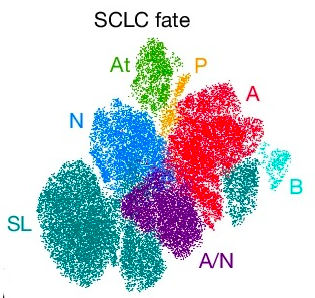
Using genetically engineered models of SCLC, the team found that the fast-growing tumors do not arise from mature neuroendocrine cells, as previously thought, but from basal stem cells, the progenitors of all lung cells. Single-cell analyses revealed that these basal-derived tumors are remarkably plastic, moving through multiple cellular identities as they grow.
Together, these findings reshape our understanding of how SCLC tumors arise and evolve. By illuminating the roots of tumor heterogeneity and plasticity, this work opens new avenues for therapies aimed at stopping cancer cells from changing identity to evade treatment. The work also has implications for other types of cancer, including multiple gastrointestinal cancers, that are characterized by high degrees of plasticity.
This research was published in Nature.
Share

