
Marie R. Siwicki, PhD
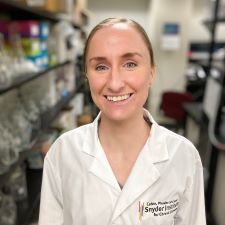
Neutrophils are important anti-microbial cells within the innate immune system. Recently, it has been shown that neutrophils can perform diverse functions, taking on both pro-inflammatory and pro-healing roles in response to tissue injury or insult. Dr. Siwicki's [Dale F. and Betty Ann Frey Fellow] goal is to understand how different neutrophil subtypes or states function to balance inflammatory versus regenerative processes, ultimately influencing tissue health and cancer. This work has the potential to uncover the basis of neutrophils' pro-tumor versus anti-tumor functions and could open the door to therapeutic targeting of specific neutrophil behaviors in order to improve clinical outcomes in cancer. Dr. Siwicki received her PhD from Harvard Medical School, Boston and ScB from Brown University, Providence.
Ben F. Brian, PhD
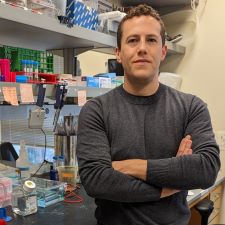
Abnormal interactions between our immune system and our gut microbes can lead to inflammation that drives colon and gastric cancer growth. Dr. Brian [HHMI Fellow] is investigating how the immune system recognizes and responds to these microbes, and how these interactions contribute to abnormal inflammation that can fuel cancer growth. Microbiota-immune interactions have been generally studied in the context of "clean" laboratory mice, but these models do not fully capture human immunology and the complex interplay between host cells and foreign microbes. To overcome this, Dr. Brian plans to study these interactions in "dirty" mice, colonized by a diverse community of microbes as well as pathogens. He will then use laboratory mice with more defined microbial communities to test how recognition of specific microbes by the immune system is regulated and how disruptions to this regulation contributes to inflammation. Dr. Brian received his PhD from the University of Minnesota, Twin Cities and his BS from the University of California, Santa Barbara.
CONNECT
1.877.7CANCER
info@damonrunyon.org
One Exchange Plaza
55 Broadway, Suite 302
New York, NY 10006


