

Sarah W. Cai, PhD
Sarah W. Cai, PhD
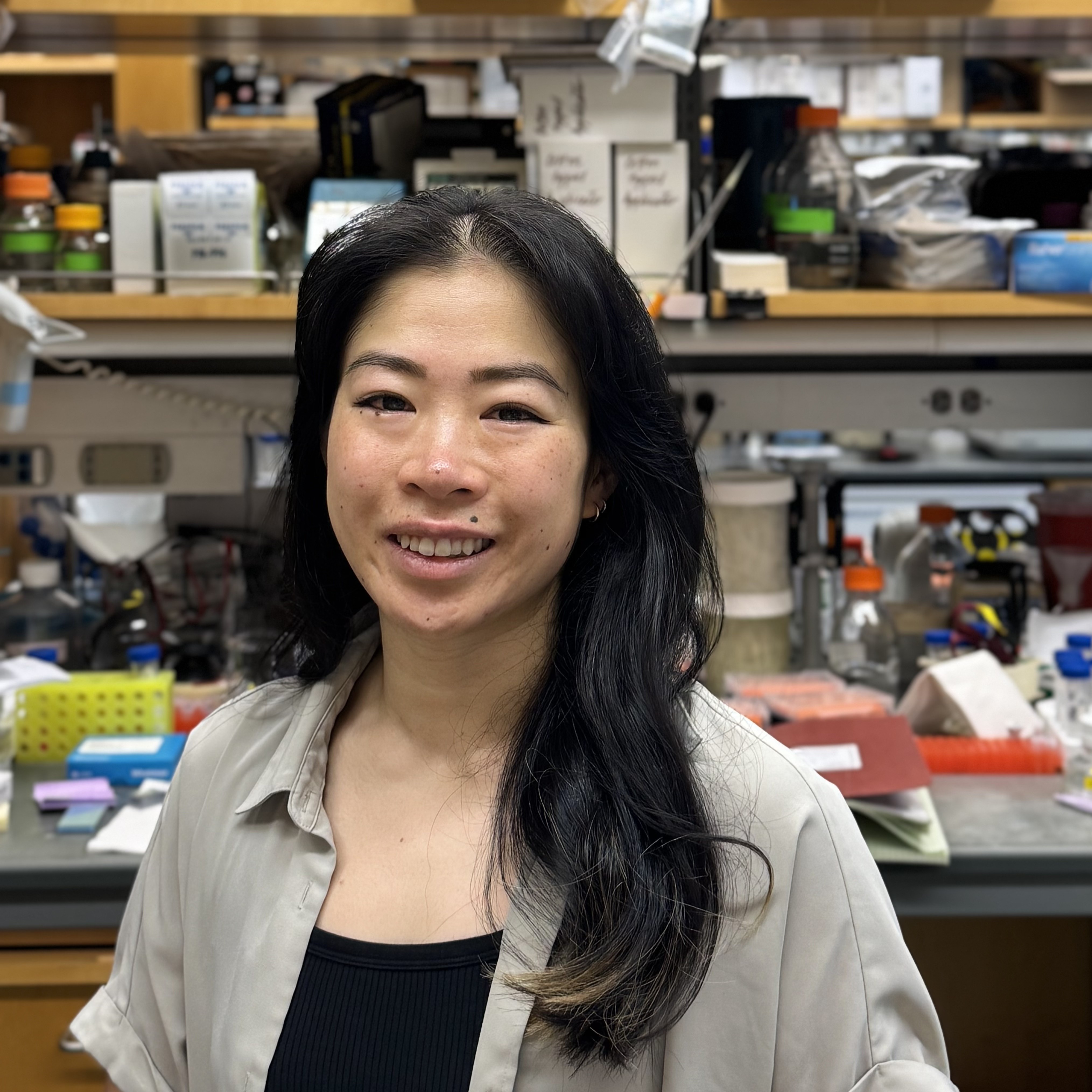
Cancer-associated pain can arise directly from tumor growth or as a side effect of chemotherapy drugs. First-line cancer treatments, such as cisplatin and paclitaxel, contribute to pain hypersensitivity by increasing the activity and expression of TRP ion channels—the receptors that detect painful stimuli in sensory neurons and trigger pain sensation. Research thus far has focused on how these receptors look and behave at a single-molecule level (one copy) or at a cellular/organismal level (many thousands of copies per neuron). However, TRP channels are also proposed to operate in nanoscale clusters (tens of copies) that amplify signaling within a sensory neuron. Dr. Cai’s research will use state-of-the-art microscopy techniques alongside biochemical and cell-based approaches to study how receptors are organized on the surface of sensory neurons. She aims to understand how inflammation and injury, including toxicity from chemotherapy drugs, contribute to acute and chronic pain. This work will provide fundamental insights into pain signaling that can inform the development of new pain management strategies. Dr. Cai received her PhD from The Rockefeller University, New York, and her BS from California Institute of Technology, Pasadena.
CONNECT
1.877.7CANCER
info@damonrunyon.org
One Exchange Plaza
55 Broadway, Suite 302
New York, NY 10006


