

Youngmu (Nick) Shin, PhD
Youngmu (Nick) Shin, PhD
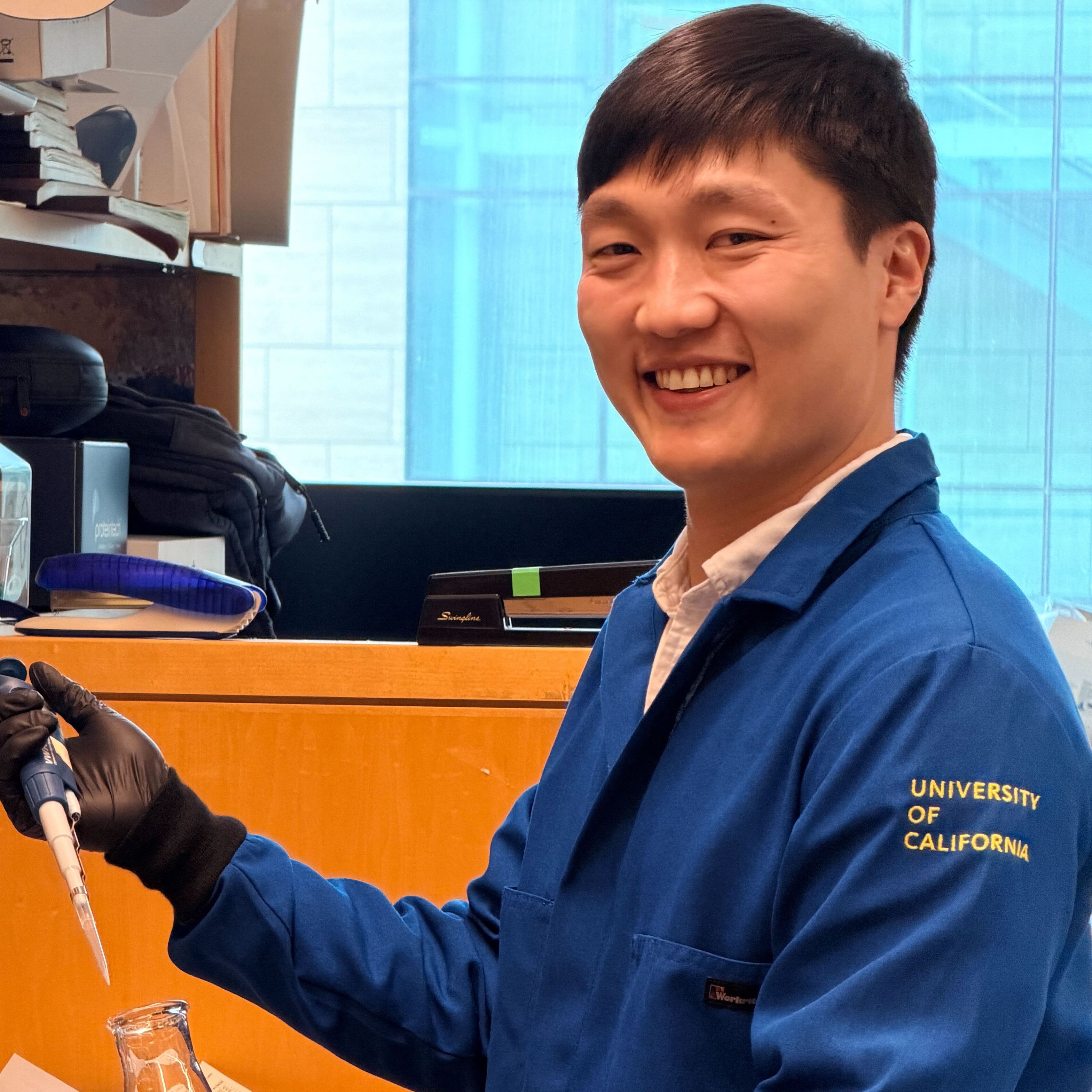
Cells in our bodies constantly talk to each other, and this cell-to-cell communication controls important processes such as how our immune system detects and kills cancer cells. It is not well understood, however, how cells build the tiny, specialized contact sites where this communication happens. Dr. Shin hypothesizes that many of these contact sites, called synapses, are organized by scaffold proteins that come together into droplet-like clusters, called condensates, to facilitate cell-to-cell communication. Dr. Shin is testing this hypothesis by building artificial versions of this cell–cell interface. He engineers simple, synthetic proteins that act as scaffolds, uses them to create a “synthetic synapse” between cells, and then studies how changing these scaffolds alters the shape and strength of the connection. He plans to combine these experiments with simulations that model how the building blocks of these scaffolds behave and cluster. By stripping cell–cell contacts down to their essential parts, this work aims to uncover the physical rules that cells use to organize communication sites. In the long term, these principles could be used to design immune cells—such as engineered T cells for cancer therapy—that form more precise connections with diseased cells while sparing healthy tissue.
CONNECT
1.877.7CANCER
info@damonrunyon.org
One Exchange Plaza
55 Broadway, Suite 302
New York, NY 10006


