
Damon Runyon honors Matthew G. Vander Heiden, MD, PhD, at 80th Anniversary Dinner
Share


The Damon Runyon Cancer Research Foundation held its 80th Anniversary Dinner at the Metropolitan Club in New York on Thursday, June 4, 2026. The event raised nearly $1 million to support exceptional young scientists conducting high-risk, high-reward cancer research.
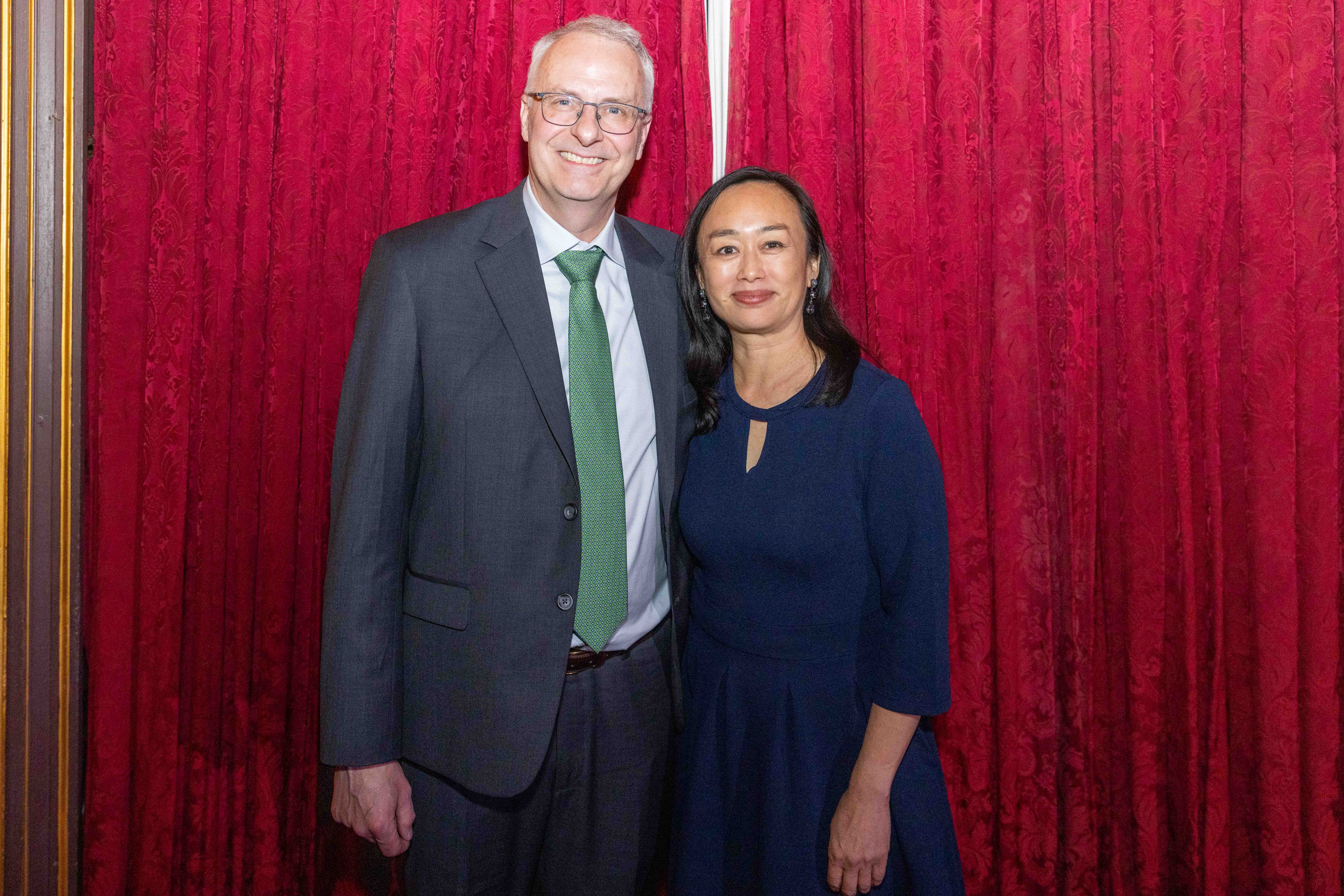
The dinner honored Matthew G. Vander Heiden, MD, PhD, Director of the Koch Institute for Integrative Cancer Research, the Lester Wolfe Chair in Molecular Biology, and a Professor in the Department of Biology at the Massachusetts Institute of Technology. A former Damon Runyon Fellow and former Damon Runyon-Rachleff Innovator, Dr. Vander Heiden helped define the field of cancer metabolism, or how cancer cells rewire their use of nutrients to support growth and survival.
“When I was a PhD student, this intersection between cancer and metabolism was not something a lot of people were doing,” he recalled. “So from a business perspective, funding me to chase this idea was not a good decision.”
Fortunately, the Damon Runyon Fellowship Award Selection Committee was looking to invest in precisely this kind of out-of-the-box thinking. Decades later, Dr. Vander Heiden’s research has produced a number of life-saving therapies, including a drug that can cross the blood-brain barrier to treat the most common form of brain cancer affecting young adults.
“I feel very lucky and special to have been involved in the development of drugs that actually help real people,” Dr. Vander Heiden said.
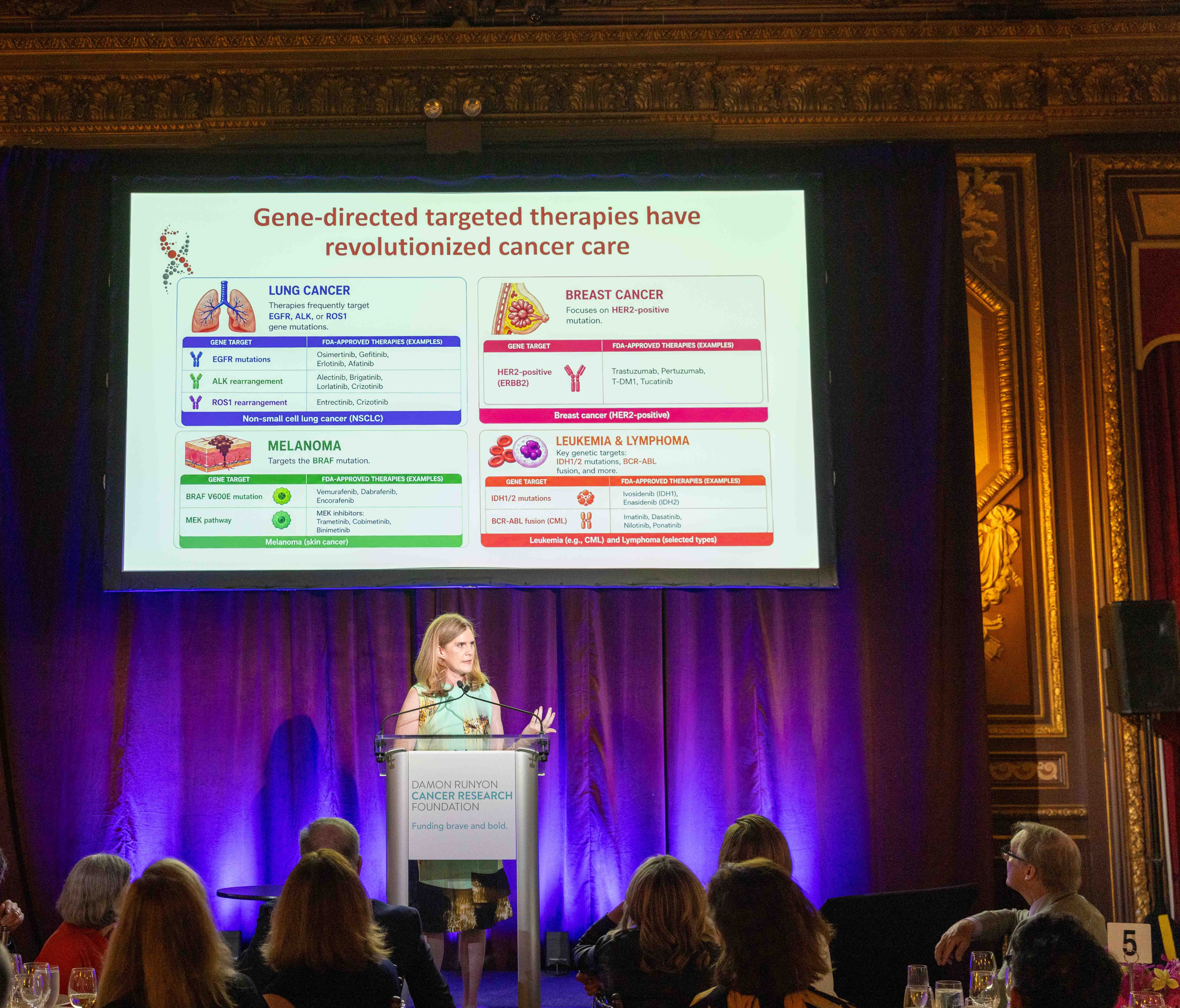
Current Damon Runyon scientists are following in his trailblazing footsteps. Damon Runyon Clinical Investigator Kelly L. Bolton, MD, PhD, of Washington University School of Medicine, presented encouraging findings from two clinical trials she is conducting for drugs that target clonal hematopoiesis, a precancerous blood condition. If successful, these drugs would be the first genetically targeted preventative therapies for cancer.
Dinner attendees also heard from Damon Runyon-Bakewell Foundation Rachleff Innovator Mark Yarmarkovich, PhD, at NYU Grossman School of Medicine, who pioneered peptide-centric (PC)-CAR T cells, which enable targeting of tumor-specific mutations long considered undruggable with conventional therapies. The first PC-CAR is being evaluated in a first-in-class clinical trial targeting a protein that drives neuroblastoma, and PC-CARs for other cancers are advancing toward clinical translation.
The occasion of the Foundation’s 80th anniversary also marked the establishment of the Walter Winchell Society. Named for the famous broadcaster who went on the radio after his good friend Damon Runyon died of throat cancer to raise money for cancer research, the Society recognizes and celebrates the Foundation’s emeritus trustees for their vital contributions to the Board over the past 80 years.
“[Walter Winchell] and the original trustees had the vision to support young scientists,” said Yung S. Lie, PhD, President and CEO of Damon Runyon. “Over the decades, the Board has chosen to prioritize the possibility of breakthroughs over incremental progress, and our legacy of impact is a direct result of their bold courage.”
Share

