

Mounica Vallurupalli, MD
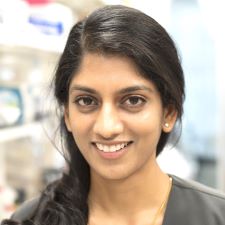
Before a gene can be expressed, a protein known as a splicing factor must remove non-coding regions (introns) from the RNA strand. Mutations in splicing factors, and specifically one called SF3B1, can lead to the development of certain blood cancers. Dr. Vallurupalli [David M. Livingston, MD, Physician-Scientist] will use genome editing technologies to generate and characterize SF3B1-mutant models in human adult blood stem cells. She will also screen for other genetic factors that may influence the outcome of SF3B1 mutations. Her goal is to identify previously unrecognized therapeutic targets for treating splicing factor-mutated blood cancers.
Nicole M. Cruz, MD

About 70% of pediatric leukemias and up to 10% of adult leukemias are caused by a genetic disruption in which the mixed lineage leukemia (MLL) 1 gene breaks off and attaches to a different chromosome. This event, known as a chromosomal translocation, gives rise to a distinct subset of leukemias called MLL-rearranged acute myeloid leukemia (AML). Studies have shown that a protein called KMT2D plays a critical role in the development of MLL-rearranged AML. However, the potential of KMT2D as a novel therapeutic target remains underexplored. Dr. Cruz [The Mark Foundation for Cancer Research Physician-Scientist] will use molecular biology, epigenetic, and biochemistry approaches to describe the precise molecular mechanism by which KMT2D regulates gene expression in MLL-rearranged AML. Her work will provide insight into potentially targetable proteins for this aggressive blood cancer.
James Swann, VetMB, DPhil
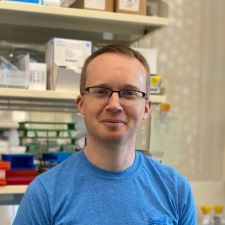
A key question in cancer biology is how genetic mutations, acquired over time, interact with environmental factors to affect emergence and progression of disease. This is particularly relevant in blood cancers because many people acquire genetic mutations in blood-forming stem cells in the bone marrow but only a small proportion go on to develop acute myeloid leukemia (AML). Dr. Swann [William Raveis Charitable Fund Fellow] is investigating whether inflammatory signals alter the behavior of stem cells that have already acquired an initial mutation, causing them to acquire features of cancer that will hasten the onset of AML. Specifically, Dr. Swann is interested in whether pre-cancerous stem cells change their gene expression in response to inflammation, which might allow them to outcompete normal cells in the bone marrow. He is utilizing cutting-edge techniques such as CRISPR editing of blood stem cells to investigate the molecular pathways responsible for these biological changes. This project has the potential to identify molecular pathways activated by inflammation that might promote AML development, offering new targets for therapeutic interventions. Dr. Swann received his VetMD (DVM) from the University of Cambridge and his DPhil (PhD) from the University of Oxford.
Ryan A. Flynn, MD, PhD
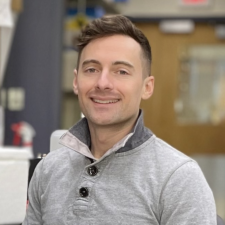
Many cancer diagnostic and treatment strategies use markers on the cell surface to find and kill cancer cells in a sea of healthy tissue. Dr. Flynn's research aims to expand our knowledge of what molecules are found on the surface of cancer cells. He will focus on acute myeloid leukemia (AML), as there is a major unmet clinical need for new curative treatments. Specifically, he aims to define RNA as a new cell surface molecule that could have unique structures on AML cells. With this knowledge he will develop antibodies to selectively detect cancer cells and enable tumor killing. Because tumors from other parts the body also express RNA on their surface, this strategy is expected to be broadly applicable to other cancer types.
Aaron D. Viny, MD

Up to 50% of patients with acute myeloid leukemia (AML) have a genetic alteration called DNA methylation, in which a carbon methyl group is added to the DNA molecule, typically turning the methylated gene "off." A mainstay of therapy is the use of hypomethylating agents, which prevent copying of these modifications during cell division, but this therapy is effective in only 20-30% of patients. Using chemical and genetic manipulation in mouse bone marrow, Dr. Viny [Damon Runyon-Doris Duke Clinical Investigator] aims to determine the effect of DNA methylation on the ability of specific regions of the genome to be accessible to proteins involved with gene expression and other regions to be inaccessible and "silenced." In a prospective phase II clinical trial, he will treat relapsed AML patients with dual hypomethylating agents. By studying these patients' genetic profiles, he aims to determine the genetic features that contribute to therapy response, paving the way for more effective interventions to be developed for patients with acute myeloid leukemia. Dr. Viny was previously a Damon Runyon Fellow.
Nathan Singh, MD
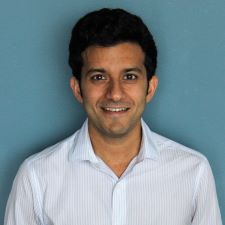
Chimeric antigen receptor T cell (CAR T cell) therapy, in which a patient's own immune cells are engineered to target their cancer, has changed the treatment landscape for many blood cancers. Despite promising early results, however, long-term follow-up has revealed that nearly half of patients treated with CAR T cells eventually experience cancer recurrence. Using a variety of techniques in cell lines and patient samples, Dr. Singh [Bakewell Foundation Clinical Investigator] aims to understand how interactions between engineered T cells and blood cancer cells in some cases lead to long-term remission, and in others to therapeutic failure. The broad goals of his lab are to understand the biological signals that cause these therapies to fail, and to use this knowledge to design next-generation immunotherapies that can cure more patients.
Wallace A. Bourgeois, MD
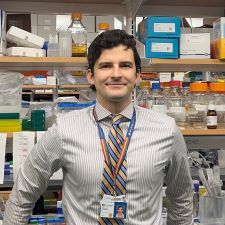
Acute myeloid leukemia (AML) with rearrangements of the KMT2A gene (KMT2A-r) or NPM1 mutation (NPM1m) affect children and adults and can be difficult to treat even with highly intensive therapy. Targeted, less toxic therapies are urgently needed. Menin inhibitors are novel small molecules that block a critical interaction between the KMT2A protein and another protein called menin. This protein-protein interaction is essential in sustaining both KMT2A-r and NPM1m AML. Menin inhibitors have now entered clinical trials for children and adults have shown promising results. However, it has also been demonstrated that up to 40% of patients will develop resistance to a menin inhibitor when it is given alone due to a mutation in the MEN1 gene, which encodes the protein menin. Dr. Bourgeois is investigating whether combination therapy can prevent or overcome MEN1 mutations that confer resistance to menin inhibitors. Additionally, he is developing models to understand how and why resistance to menin inhibitors is sometimes driven by MEN1 mutations, but other times not. The overarching goal of the project is to identify combination therapies that prevent and overcome menin inhibitor resistance and to better understand the different ways in which resistance to menin inhibitors develops.
Manuel Osorio Valeriano, PhD
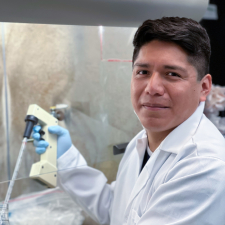
Human cells compact their vast genomes into the small confines of the nucleus by wrapping their DNA into a highly complex structure called chromatin. Packaging DNA into chromatin, however, affects all nucleic acid-transacting machines (e.g., transcription factors) that need to access the genomic information stored in the DNA. NuRD is a large multi-subunit protein complex that plays a major role in making chromatin either accessible or inaccessible. Dysregulation of NuRD and aberrant targeting of the complex can result in the emergence of several types of cancers, including breast, liver, lung, blood, and prostate cancers. Dr. Osorio Valeriano’s [Philip O'Bryan Montgomery, Jr., MD, Fellow] work will reveal mechanistic aspects of NuRD-mediated chromatin regulation and pave the way for the development of novel therapeutic approaches that target cancers more effectively. Dr. Osorio Valeriano received his PhD from Philipps University and his MSc and BSc from the National Autonomous University of Mexico.
Senén D. Mendoza, PhD
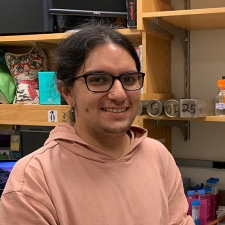
In addition to acute illness, viruses can cause cancers. While our understanding of cellular immunity against viruses that have DNA-based genomes is robust, we know less about how cells protect themselves against RNA-based viruses such as hepatitis C, a leading cause of liver cancer. Because many cellular defenses against viruses are known to be shared between mammals and bacteria, Dr. Mendoza [HHMI Fellow] is looking for new cellular defenses against RNA viruses in bacteria and will investigate how these defenses work. The resulting discovery of anti-viral defenses will broaden our understanding of how cells protect themselves against RNA viruses, which will improve our capacity to support patients' immune systems when infected with cancer-causing RNA viruses. Dr. Mendoza received their PhD from the University of California, San Francisco, and their BS from the University of Miami.
Kelly L. Bolton, MD, PhD
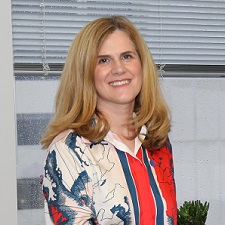
Myeloid neoplasms (MN), including acute myeloid leukemia and myelodysplastic syndrome, are lethal blood cancers. The genetic mutations in the blood that lead to MN can occur years before diagnosis and maintain almost normal function before transformation. Certain mutations, including those in the gene IDH2, have been identified as high-risk for developing MN. Individuals with a reduction in the number of mature blood cells (cytopenias) who harbor acquired mutations in their blood, yet do not meet criteria for a cancer diagnosis, have a condition called cytopenias of undetermined significance (CCUS). These individuals almost invariably develop MN. Dr. Bolton will conduct a clinical trial to evaluate whether the IDH2 inhibitor enasidenib can be used as a therapy for CCUS. She will assess mechanisms of resistance and determine whether enasidenib can prevent the development of MN. This represents the first use of genetically targeted therapy for cancer prevention.
CONNECT
1.877.7CANCER
info@damonrunyon.org
One Exchange Plaza
55 Broadway, Suite 302
New York, NY 10006


