

Himisha Beltran, MD

Project title
"Utilizing genome sequencing to elucidate mechanisms of resistance in advanced prostate cancer"
Many prostate cancers initially respond to treatments that block the hormone testosterone, thus halting tumor growth. These treatments block testosterone by targeting a molecule called the androgen receptor (AR). However, patients often develop resistance to these drugs, giving rise to an aggressive AR-independent form of prostate cancer. Often under-recognized, AR-negative neuroendocrine prostate cancer (NEPC) currently represents approximately 25% of advanced prostate cancers. The clinical diagnosis is most often made when the cancer has metastasized, especially to liver and brain, and is associated with a low prostate specific antigen (PSA) level. The poor prognosis of NEPC is, in part, due to an incomplete understanding of the molecular events underlying its development.
By utilizing valuable tissue resources and state-of-the-art technologies, Dr. Beltran [Damon Runyon-Gordon Family Clinical Investigator] seeks to comprehensively evaluate NEPC tumors for recurrent molecular alterations and determine their functional and clinical impact. She will identify a genomic profile that distinguishes NEPC from the more common type of prostate cancer, prostate adenocarcinoma, and evaluate the impact of NEPC-associated alterations on patient outcomes and their ability to predict patient response to available therapies. Her goal is to improve our understanding of molecular events associated with disease progression and help develop strategies toward preventing NEPC. Distinguishing NEPC will help identify prostate cancer patients unlikely to benefit from additional AR-targeted strategies and select patients for novel targeted treatment approaches for NEPC.
Institution
Weill Medical College of Cornell University
Sponsor(s) / Mentor(s)
Mark A. Rubin, MD
Cancer type
Prostate
Research area
Genomics
Award Program
Clinical Investigator
Named Award
Gordon Family Clinical Investigator
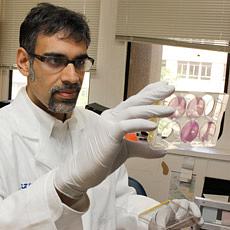
Deepak Nijhawan, MD, PhD
Project title
"Using chemistry to identify new targets in lung cancer"
Despite recent advances, lung cancer remains the leading cause of cancer related death in the United States, and there is an urgent need for new therapies. The most successful treatments for lung cancer to date are the targeted drugs erlotinib and crizotinib. These drugs block tumor growth in cancers that respectively harbor either mutations in EGFR or translocations in the ALK gene. Unfortunately, only a minor fraction of patients’ tumors have EGFR mutations or ALK translocations; therefore, the vast majority of patients lack an effective targeted therapy.
Dr. Nijhawan aims to identify novel targets in lung cancer so that similarly effective therapy can be developed for other patients. He has identified a set of chemicals called benzothiazoles that are effective in blocking the growth of 25% of lung cancer cell types tested. The protein target of the benzothiazole and the genetic alterations that predict sensitivity are unknown. His research focuses on identifying both the benzothiazole protein target as well as predictive biomarkers that explain why only certain lung cancers are susceptible to its effect. The identification of these biomarkers in lung cancer patients may highlight a set of patients who could be treated with benzothiazole-related compounds.
Institution
University of Texas Southwestern Medical Center
Sponsor(s) / Mentor(s)
Steven L. McKnight, PhD, and David H. Johnson, MD
Cancer type
Lung
Research area
Chemical Biology
Award Program
Clinical Investigator
Christine M. Lovly, MD, PhD

Project title
"Developing novel therapeutic strategies for ALK-fusion positive lung cancer"
Lung cancer is responsible for more cancer-related deaths in the U.S. and worldwide each year than any other cancer. Historically, patients with advanced metastatic disease have been treated with conventional chemotherapy. Recently, however, subsets of lung cancer patients have been identified with specific molecular alterations that allow for treatment with rationally chosen targeted therapies. One molecular subset of lung cancer is characterized by the presence of alterations in a protein called ALK tyrosine kinase. Patients with lung cancers that harbor ALK fusions derive significant clinical benefit from a newly approved drug that blocks the action of the mutant ALK. Unfortunately, the degree and duration of tumor response to ALK inhibitor drugs varies, and patients inevitably develop progressive disease, or "acquired resistance." Additional strategies are needed to improve the treatment of these lung cancer patients.
Dr. Lovly's goal is to develop novel treatment strategies for ALK positive lung cancer.
She plans to improve our understanding of how ALK fusions transmit signals to promote cancer and of how these signals become altered in the context of acquired resistance to ALK inhibitors. Her work will identify novel targets that can be blocked in combination with ALK inhibitors, to promote enhanced anti-tumor responses. Since ALK mutations have been described in a growing number of hematologic and solid organ tumors, an improved understanding of ALK signaling-as well as mechanisms of resistance to ALK inhibition-may also have potential implications for other cancers.
Institution
Vanderbilt University
Sponsor(s) / Mentor(s)
Pierre P. Massion, MD & David P. Carbone, MD, PhD
Cancer type
Lung
Research area
Experimental Therapeutics
Award Program
Clinical Investigator
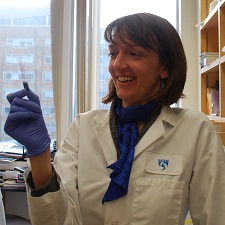
Ann Mullally, MD
Project title
"Determining the role of aberrant growth factor signaling in maintaining disease-propagating cells and mediating JAK2 inhibitor resistance in myeloproliferative neoplasms"
Myeloproliferative neoplasms (MPN) are a type of blood cancer sometimes considered to be "pre-leukemias" which can progress to leukemia and are also lethal cancers in their own right. A population of rare hematopoietic stem cells (HSC), called MPN disease-propagating cells, typically harbor mutations that cause the cells to overproliferate. These mutated HSC produce abnormal cancerous blood cells that over time can eliminate the normal blood cells in the bone marrow. In MPN, the cancerous blood cells secrete an excess of substances called growth factors that allow cancer cells to survive.
Dr. Mullally aims to understand which of the growth factors help the mutated HSC to survive and to then use drugs to block the activity of these growth factors, thus killing the mutated HSC. This approach will lead to more successful treatments for MPN and leukemia, resulting in a higher cure rate for patients.
Institution
Brigham and Women's Hospital
Sponsor(s) / Mentor(s)
Benjamin L. Ebert, MD, PhD, and Jerome Ritz, MD
Cancer type
Blood
Research area
Stem Cell Biology
Award Program
Clinical Investigator
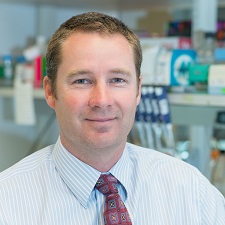
Cameron J. Turtle, MD, PhD
Project title
"The impact of the colonic microbiota on reconstitution of CD161hi cells and clinical outcomes after allogeneic hematopoietic stem cell transplantation"
Hematopoietic stem cell transplantation (HCT) is a potentially curative procedure for patients with hematologic malignancies who are otherwise incurable with conventional therapies. Despite advances in post-transplant care, the morbidity and mortality of complications such as graft versus host disease (GVHD) and infections remain significant limitations, and hinder the application of this life-saving procedure. Infection and GVHD are influenced by the immune system, which in turn is regulated by the bacterial contents of the human gastrointestinal tract.
Dr. Turtle will test the hypotheses that alterations in the bacterial composition of the human gastrointestinal tract regulate the reconstitution of a specialized bacteria-responsive subset of immune cells after HCT, and that impaired regulation of this immune cell subset is associated with an increased risk of infection or GVHD.
Institution
Fred Hutchinson Cancer Research Center
Sponsor(s) / Mentor(s)
Stanley R. Riddell, MD
Cancer type
Blood
Research area
Basic Immunology
Award Program
Clinical Investigator
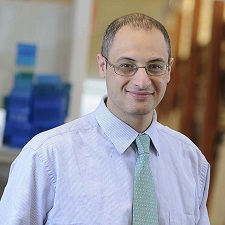
Omar Abdel-Wahab, MD
Project title
"Understanding and targeting altered histone modifiers in the myeloid malignancies"
Dr. Abdel-Wahab [Edward P. Evans Foundation Clinical Investigator] specializes in specific blood cancers called myelodysplastic syndrome (MDS) and acute myelogenous leukemia (AML). He recently identified mutations in the gene ASXL1 in patients with MDS and AML. ASXL1 is one of the most commonly mutated genes in MDS patients, and these mutations occur in up to 20% of AML patients. ASXL1 mutations result in a worsened overall survival in MDS and AML patients and contribute to chemotherapy resistance in AML. However, exactly how these mutations contribute to leukemia development remains unknown.
He has demonstrated that loss of ASXL1 results in increased expression of genes that are known to promote development of AML. Preliminary data suggests that ASXL1 regulates expression of key genes by affecting proteins called histones. In a mouse model, loss of ASXL1 alone results in a phenotype remarkably similar to human MDS. Moreover, when ASXL1 loss is combined with other genes known to promote chronic leukemia in mice, an acute leukemia develops that hastens death of the mice. His overall goal is to gain a more thorough understanding of ASXL1 function and to ultimately test approved as well as novel targeted therapeutics for treatment of MDS and AML.
Institution
Memorial Sloan Kettering Cancer Center
Sponsor(s) / Mentor(s)
Ross L. Levine, MD
Cancer type
Blood
Research area
Cancer Genetics
Award Program
Clinical Investigator
Named Award
Edward P. Evans Foundation Clinical Investigator
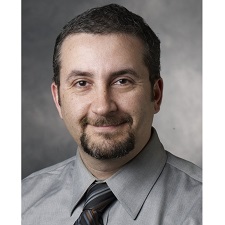
Arash Ash Alizadeh, MD, PhD
Project title
"Targeting the malignant reprograming of early hematopoietic progenitors to mature aggressive human B-cell lymphomas"
Diffuse Large B-cell Lymphoma (DLBCL) is the most common aggressive lymphoma in adults. Unfortunately, current therapies typically fail in nearly half of these patients. Dr. Alizadeh proposes a novel treatment strategy for this disease: to characterize and isolate premalignant stem cells before they transform into cancer cells. He has found that expression of a single oncogene called BCL6 is capable of reprogramming these cells from normal cells to aggressive malignant cells. He aims to define the specific genetic alterations that can give rise to this cell reprogramming. This research will be important both for understanding cancer biology, as well as for developing more effective means for treatment of lymphoma patients.
Institution
Stanford University School of Medicine
Sponsor(s) / Mentor(s)
Ronald Levy, MD
Cancer type
Blood
Research area
Cancer Genetics
Award Program
Clinical Investigator
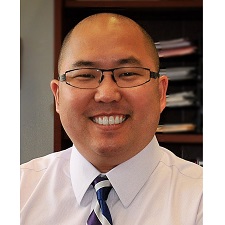
Stephen T. Oh, MD, PhD
Project title
"Leveraging NFkB pathway dysregulation for therapeutic benefit in myeloproliferative neoplasms"
Myeloproliferative neoplasms (MPNs) are a group of blood cancers in which a malignant cell population proliferates out of control. Myelofibrosis (MF) is one type of MPN in which the bone marrow becomes replaced by scar tissue, leading to progressive failure of normal blood cell functions and ultimately death, on average five years after initial diagnosis. MPNs, including MF, can evolve to secondary acute myeloid leukemia (sAML), which is almost invariably fatal. There is no reliable curative treatment currently available for MPNs or MF. Targeted inhibitors of a protein called JAK2 provide significant symptomatic benefit for MF patients. However, these treatments do not cure the disease, nor has it been shown that they can prevent or delay progression to sAML. Dr. Oh [Doris Duke-Damon Runyon Clinical Investigator] aims to investigate the cellular abnormalities that underlie these blood cancers. These studies have the potential to lead to the development of improved treatments for MPNs.
Institution
Washington University
Sponsor(s) / Mentor(s)
Daniel C. Link, MD
Cancer type
Blood
Research area
Signal Transduction
Award Program
Clinical Investigator
L. Elizabeth Budde, MD, PhD

Project title
"Targeting CD123 using chimeric antigen receptor T cells for treatment of acute myeloid leukemia"
Hematopoietic stem cell transplant is the preferred and only curative treatment for most patients with acute myeloid leukemia (AML); however, a significant percentage of patients will eventually relapse. A novel effective therapy option is therefore urgently needed. Dr. Budde [The Jake Wetchler Foundation for Innovative Pediatric Cancer Research Clinical Investigator] is testing a new strategy that uses patients' own immune T cells, which have been modified to specifically target and kill leukemia cells. She will direct a Phase 1 clinical trial using these modified immune T cells as therapeutics for patients with AML. This trial is a first-in-human study building on her extensive preclinical research on these cells. She is also developing ways to enhance the potency of these modified immune cells in killing leukemia cells. This therapeutic approach has the potential to change the treatment paradigm and may significantly improve the cure rate for patients with leukemia.
Institution
City of Hope
Sponsor(s) / Mentor(s)
Stephen J. Forman, MD, FACP
Cancer type
Blood
Research area
Immunotherapy
Award Program
Clinical Investigator
Named Award
Jake Wetchler Foundation for Innovative Pediatric Cancer Research
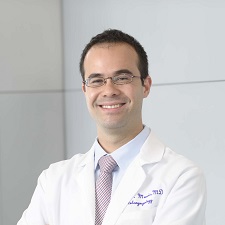
Luc G. Morris, MD
Project title
"Functionalizing tumor suppressor gene mutations and deletions in head and neck cancer"
Head and neck cancer is a lethal malignancy that can arise in the mouth, throat, voice box, and related areas. These tumors are squamous cell cancers that are, in many cases, caused by tobacco use or human papillomavirus (HPV) infection. Head and neck cancers have many molecular similarities with squamous cell cancers of the lung and esophagus. Dr. Morris is studying a poorly understood gene called FAT1, which is frequently altered in head and neck cancer (as well as lung and esophageal cancer). He has found that this gene, in its normal state, prevents tumor development. In this project, he will determine the effects of FAT1 alterations on tumor cell growth, squamous cell development and differentiation, and the clinical prognosis of patients. This work will help to develop new ways of therapeutically targeting the pathways that promote the development of head and neck and other squamous cell cancers.
Institution
Memorial Sloan Kettering Cancer Center
Sponsor(s) / Mentor(s)
Timothy A. Chan, MD, PhD and James Fagin, MD
Cancer type
Head and Neck Cancer
Research area
Genomics
Award Program
Clinical Investigator
CONNECT
1.877.7CANCER
info@damonrunyon.org
One Exchange Plaza
55 Broadway, Suite 302
New York, NY 10006


