

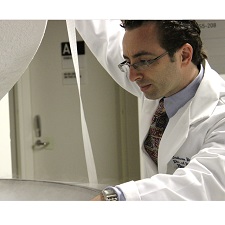
Joshua Brody, MD
Project title
"Flt3L-primed 'in situ' vaccination for low-grade lymphoma - Phase I/II study of intratumoral injection of rhuFlt3L and poly-ICLC with low-dose radiotherapy [NCT01976585]"
Dr. Brody aims to develop a novel treatment approach for patients with advanced-stage lymphoma, by which the patient's immune system is trained to recognize and eliminate his/her own cancer. This approach, an "in situ vaccine," recruits and activates specific immune cells, dendritic cells (DC), at the location of the treated tumor - where they can then educate the rest of the immune system to recognize and eliminate tumors throughout the body. The first patients enrolled on this clinical trial have already shown the recruitment and activation of DC within the treated tumor as well as regressions of lymphoma at sites distant from the treated site. The in situ vaccine will initially be tested in patients with low-grade lymphoma, with the goal of quickly expanding to other tumor types including melanoma and head and neck cancer.
Institution
Icahn School of Medicine at Mount Sinai
Sponsor(s) / Mentor(s)
Nina Bhardwaj, MD, PhD and Miriam Merad, MD, PhD
Cancer type
Blood
Research area
Immunotherapy
Award Program
Clinical Investigator
Named Award
William Raveis Charitable Fund Scientist
Alejandro Gutierrez, MD

Project title
"Mechanisms and therapeutic targeting of EZH2-dependent chemoresistance in T-ALL"
It remains unclear why some patients' tumors can be cured with chemotherapy, whereas other tumors that appear to be nearly identical are completely chemoresistant. Dr. Gutierrez focuses on this issue in a particularly high-risk subset of T-cell acute lymphoblastic leukemia, a disease that most commonly affects older children and young adults. His goals are to define the molecular basis of resistance to conventional chemotherapy in patients with this disease, and to leverage this knowledge to develop a therapeutic strategy to restore chemosensitivity. Ultimately, this could lead to significant improvements in clinical outcome for these patients.
Institution
Boston Children's Hospital
Sponsor(s) / Mentor(s)
Stuart Orkin, MD and Anthony Letai, MD, PhD
Cancer type
Blood
Research area
Chemoresistance
Award Program
Clinical Investigator
Eliezer M. Van Allen, MD

Project title
"Dissecting response to conventional and emerging DNA damage and repair therapies"
Many cancers are treated with chemotherapies that affect DNA repair, such as platinum chemotherapy, and some patients derive significant benefit from these agents. However, the underlying genomic features that drive selective response to these treatments is incompletely characterized. Dr. Van Allen aims to blend precision cancer medicine principles with DNA repair treatments and enhance cancer care. He will do so by studying the genomics of response to existing and emerging DNA repair therapies in preclinical models as well as patients across different tumor types.
Institution
Dana-Farber Cancer Institute
Sponsor(s) / Mentor(s)
Geoffrey I. Shapiro, MD, PhD
Cancer type
All Cancers
Research area
Computational Biology
Award Program
Clinical Investigator
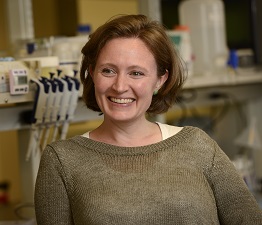
Aude G. Chapuis, MD
Project title
"Multifaceted transgenic TCR approach to high-risk AML"
Non-small cell lung cancer (NSCLC) is a particularly aggressive type of lung cancer, and mesothelioma is an equally aggressive cancer of the lining of the lung. Despite recent therapeutic advances, approximately 190,000 and 3,000 Americans respectively succumb to these cancers each year, emphasizing the urgent need for more effective treatments. Therapies that use cancer-recognizing immune T cells are especially promising. T cells specifically bind particular tumor-associated molecules (antigens) and kill bound cancer cells through proteins called "T cell receptors" (TCRs). Once an appropriate tumor antigen-specific TCR has been identified, genetic engineering can be used to add that TCR to a patient's T cells, thus educating them to recognize the cancer. The educated immune cells are then infused into patients, where they can seek out and destroy cancer without damaging normal tissues.
Dr Chapuis' studies will target Wilms' tumor antigen 1 (WT1), found not only on NSCLC and mesothelioma cancer cells but also on leukemia cells. She previously led studies of this approach for leukemia, which is now showing promise in the clinic for patients. Her new studies aim to develop a similar safe and effective immunotherapy for patients with deadly lung cancers, with the ultimate goal to entirely bypass the current need for toxic drug and radiation treatments.
Institution
Fred Hutchinson Cancer Research Center
Sponsor(s) / Mentor(s)
Philip D. Greenberg, MD
Cancer type
Lung
Research area
Immunotherapy
Award Program
Clinical Investigator
Priscilla K. Brastianos, MD

Project title
"Investigation of novel targeted therapeutic approaches for brain metastases"
Brain metastases are the most common tumor in the brain, most frequently originating from melanoma and carcinomas of the lung and breast. Of patients who develop brain metastases, approximately half succumb to the cancer in their brain. Unfortunately, treatment options are limited, and most current clinical trials in the US exclude patients with brain metastases. Dr. Brastianos recently completed a large study to understand the genetic changes that occur in brain metastases. She identified genetic alterations in brain metastases that predict sensitivity to targeted therapies. She will conduct a biomarker-driven Phase 2 study to evaluate targeted therapy in patients with brain metastases harboring specific genetic alterations. Her research will incorporate cutting-edge genomic technology and animal models to understand predictors of response, as well as resistance to targeted therapies. As most genomically guided trials in cancer have excluded patients with active brain metastases, this represents a potential paradigm shift in the management of patients with brain metastases.
Institution
Massachusetts General Hospital
Sponsor(s) / Mentor(s)
Keith T. Flaherty, MD and Tracy T. Batchelor, MD
Cancer type
Brain
Research area
Invasion and Metastasis
Award Program
Clinical Investigator
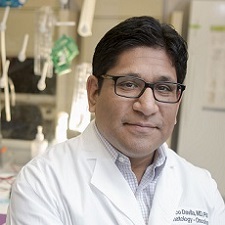
Marco L. Davila, MD, PhD
Project title
"The development and clinical translation of an armored CAR T cell therapy for immune-resistant B cell malignancies"
The goal of cancer immunotherapy is to adapt the natural components of the immune system to eradicate cancer. T cells are a type of immune cell highly evolved to detect and eradicate diseased cells. Dr. Davila is developing a novel treatment approach that involves genetic engineering of T cells as a safe and effective immunotherapy for blood cancers such as B cell lymphoma. This research has great potential because by genetically targeting T cells to a cancer, the T cell can be forced to recognize a cancer as diseased and initiate direct tumor killing, as well as activate a widespread and long-lived immune response against the cancer.
Institution
H. Lee Moffitt Cancer Center
Sponsor(s) / Mentor(s)
Michel Sadelain, MD, PhD and Claudio Anasetti, MD
Cancer type
Blood
Research area
Immunotherapy
Award Program
Clinical Investigator
Jean Y. Tang, MD, PhD

Project title
"Mechanisms of acquired resistance to Hedgehog pathway inhibitors in basal cell carcinomas"
Basal cell carcinoma (BCC) is the most common type of skin cancer. Mutations in the Hedgehog (HH) signaling pathway are frequently found in these cancers. Early-stage clinical studies of a HH pathway inhibitor drug have been successful, with 55% of patients reported to respond. However, most tumors change during the course of therapy and drug resistance eventually develops.
Dr. Tang, a dermatologist, will characterize mechanisms of drug resistance and identify new drug combinations that are effective in treatment of BCC. The ultimate goal of her research is to prevent or delay drug resistance. Her studies have the potential to benefit patients with BCC as well as those with other HH-dependent cancers, such as medulloblastoma.
Institution
Stanford University
Sponsor(s) / Mentor(s)
Philip A. Beachy, PhD, and Ervin H. Epstein, MD
Cancer type
Skin
Research area
Chemoresistance
Award Program
Clinical Investigator
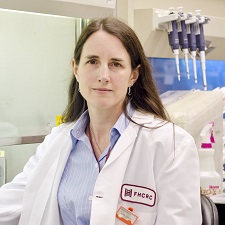
Marie Bleakley, MD, PhD
Project title
"Segregating the GVL effect from GVHD in humans"
Bone marrow transplantation, or allogeneic hematopoietic stem cell transplant (HCT), is the only curative therapy for many patients with leukemia. Certain immune cells, called T cells, contained in the donor HCT graft can cause a "graft versus leukemia" (GVL) effect which eliminates leukemic cells. Unfortunately, there are also donor T cells in the HCT graft that can cause a condition called "graft versus host disease" (GVHD). GVHD is a life-threatening immune response that remains the major barrier to the success of transplantation. Dr. Bleakley [Richard Lumsden Foundation Investigator] is developing new approaches to separate the beneficial GVL effect from detrimental GVHD after bone marrow transplantation. She has identified specific subsets of immune cells that promote GVHD; these cells can then be eliminated to reduce the frequency or severity of GVHD, while at the same time maintaining and improving the GVL effect. The Continuation Grant will be used to move this study to the clinical trial phase.
Institution
Fred Hutchinson Cancer Research Center
Sponsor(s) / Mentor(s)
Stanley R. Riddell, MD
Cancer type
Blood
Research area
Immunotherapy
Award Program
Clinical Investigator
Named Award
Richard Lumsden Foundation Investigator
Zsofia K. Stadler, MD

Project title
"Genomic assessment of de novo germline cancer susceptibility in pediatric malignancies"
Heritable factors are an important determinant of cancer risk. At present, only a small fraction of this genetic risk is explained by known cancer predisposition genes. Our preliminary data suggests that in pediatric cancers or cancers that occur in early adulthood, de novo or "new" genetic mutations may be identified that contribute to cancer causation. As such, the aim of our study is to study children with specific types of cancer (leukemia and neuroblastoma) without a family history of the disease to determine if we can identify the genetic cause of their cancer. Based upon a unique ascertainment of DNA samples from case-parent trios (unaffected parents and cancer affected child), this proposal will use next-generation sequencing approaches to detect de novo germline mutations that may account for cancer susceptibility in these young patients. This approach represents a new paradigm in cancer genetics, which could have broad applications in terms of cancer risk stratification and the primary prevention of hereditary cancers in the growing number of survivors of these childhood malignancies.
Institution
Memorial Sloan Kettering Cancer Center
Sponsor(s) / Mentor(s)
Kenneth Offit, MD, MPH, and Michael H. Wigler, PhD
Cancer type
Other Cancer
Breast
Colorectal
Research area
Cancer Genetics
Award Program
Clinical Investigator
Sarat Chandarlapaty, MD, PhD

Project title
"Therapeutic approaches to PI3K-AKT-mTOR feedback pathways in breast cancer"
The PI3K/AKT/mTOR signaling pathway normally conveys cues from the cell's environment into programs that promote cellular growth, division, and motility. Components of the PI3K signaling pathway are mutated in greater than 70% of all breast cancers and promote the persistent and exaggerated cell growth that is necessary for tumor formation and survival. This pathway is therefore a promising target for treating breast cancers; however, drugs designed to target the PI3K signaling pathway are initially effective but resistance rapidly develops. Dr. Chandarlapaty [Patterson Trust Clinical Investigator] seeks to understand how tumor cells rapidly adapt to PI3K inhibitor drugs. His initial studies indicate that cancer cells use a cellular mechanism called "negative feedback" to either activate alternative signaling pathways not blocked by the drug or reactivate the PI3K pathway. His goal is to identify other targets that can be blocked in combination with the PI3K pathway to more effectively kill cancer cells but not normal cells. These combinations will be tested in clinical trials in breast cancer patients with mutations in the PI3K pathway. In addition, the Continuation Grant will enable him to pursue studies examining the effects of ER and androgen receptor (AR) activation and signaling in breast and prostate cancers.
Institution
Memorial Sloan Kettering Cancer Center
Sponsor(s) / Mentor(s)
Neal Rosen, MD, PhD, and Clifford A. Hudis, MD
Cancer type
Breast
Prostate
Research area
Signal Transduction
Award Program
Clinical Investigator
Named Award
Patterson Trust Clinical Investigator
CONNECT
1.877.7CANCER
info@damonrunyon.org
One Exchange Plaza
55 Broadway, Suite 302
New York, NY 10006


