

David G. McFadden, MD, PhD
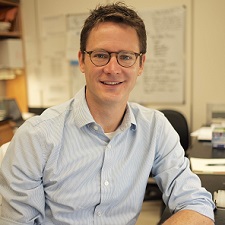
Project title
"Identifying metabolic vulnerabilities in Hürthle cell carcinoma"
Mitochondria, the “power plants” of the cell, carry their own DNA that encodes proteins important to producing the energy necessary to run a normal cell. Most cancers also depend on mitochondria to promote the growth and division of tumor cells. Dr. McFadden has shown that a form of thyroid cancer called Hürthle cell carcinoma carries mutations in the mitochondrial DNA, which are maintained in primary tumors and metastases resected from the same patients. He will study energy metabolism in Hürthle cell cancers by feeding the tumors isotope forms of nutrients (tracers) that are used to produce energy and support cell growth. The tracers can be visualized to reveal how metabolism is re-wired in these tumors and to identify novel ways to target altered mitochondrial metabolism in cancers with such genetic mutations.
Institution
University of Texas Southwestern Medical Center
Sponsor(s) / Mentor(s)
Steven L. McKnight, PhD, and Ralph J. DeBerardinis, MD, PhD
Cancer type
Other Cancer
Research area
Biochemistry
Award Program
Clinical Investigator
Karuna Ganesh, MD, PhD

Project title
"Leveraging patient-derived organoid models to define the molecular determinants of metastatic regeneration"
Over 90% of cancer deaths are caused by metastasis, the spread of cancer cells to distant organs, where uncontrolled cancer cell growth lethally compromises organ function. Despite recent advances, current treatments fail to effectively control metastasis. Dr. Ganesh is growing colorectal cancer cells, removed from patients during surgery, as three-dimensional “organoids.” This cutting-edge technology models the complexity of human organs more accurately than cells growing in a dish. Using colorectal cancer organoids, her group is studying how cancer cells gain the ability to spread and grow outside their organ of origin. Her work is uncovering core signaling modules required for metastasis, with the goal of developing more effective treatments for patients with advanced cancers. Dr. Ganesh works under the mentorship of Joan Massague, PhD, at Memorial Sloan Kettering Cancer Center, New York.
Institution
Memorial Sloan Kettering Cancer Center
Sponsor(s) / Mentor(s)
Joan Massagué, PhD
Cancer type
Colorectal
All Cancers
Research area
Invasion and Metastasis
Award Program
Clinical Investigator
Kavita Y. Sarin, MD, PhD
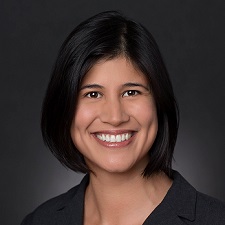
Project title
"Genetic contributions and novel therapies for individuals with frequent basal cell cancer"
Basal cell cancer (BCC) is the most common cancer in the United States with 2 million cases annually resulting in $5 billion in societal cost. Although the majority of BCCs are small and surgically accessible, some individuals develop frequent recurrences of BCC and suffer from severe disability related to surgery and decreased quality of life. Dr. Sarin [D.G. 'Mitch' Mitchell Clinical Investigator] will focus on a group of 100 patients who develop extreme numbers of this skin lesion, in order to identify the genetic mechanisms that contribute to cancer susceptibility. While most BCCs are thought to develop from DNA damage caused by the sun's ultraviolet rays, a patient's genetics also play a critical role in disease progression. Understanding the mechanisms that contribute to cancer susceptibility will help identify at-risk individuals so they can be monitored for earlier diagnosis and prevention. She also aims to develop new non-surgical therapies for these patients.
Institution
Stanford University
Sponsor(s) / Mentor(s)
Jean Y. Tang, MD, PhD, and Anthony E. Oro, MD, PhD
Cancer type
Skin
Research area
Cancer Genetics
Award Program
Clinical Investigator
Named Award
D.G. 'Mitch' Mitchell Clinical Investigator
Jennifer M. Kalish, MD, PhD
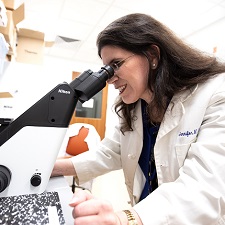
Project title
"Epigenetic and genetic mechanisms of cancer in Beckwith-Wiedemann Syndrome"
Dr. Kalish is studying a rare hereditary syndrome called Beckwith-Wiedemann syndrome (BWS), which increases the risk of children developing kidney and liver cancers. These individuals have epigenetic changes on chromosome 11 that are found in other types of cancers. Epigenetic markers modify DNA so gene expression is turned on or off; changes in this process can cause cancer. By understanding how cancer is triggered in BWS, Dr. Kalish aims to identify pathways that can be targeted for the development of new treatments both for BWS patients and for others with cancers that have similar epigenetic changes. As a physician-scientist, Dr. Kalish established the BWS Registry, which compiles both clinical data and patient samples, and created the first human cell-based models of BWS.
Institution
Children's Hospital of Philadelphia
Sponsor(s) / Mentor(s)
Marisa S. Bartolomei, PhD, and Garrett M. Brodeur, MD
Cancer type
Kidney and Bladder
Other Cancer
Pediatric
Research area
Epigenetics
Award Program
Clinical Investigator
Todd A. Aguilera, MD, PhD
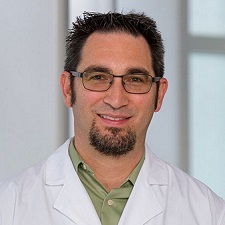
Project title
"Immunologic responses to short course radiotherapy in rectal adenocarcinoma and the impact of CD40 agonist immunotherapy"
There is a critical need for new therapeutic approaches to treat advanced stage rectal cancer, which has increased incidence in younger people and poor prognosis. Working with a multidisciplinary team, Dr. Aguilera is leading a randomized clinical trial that combines an anti-CD40 agonist immunotherapy with radiation and chemotherapy for locally advanced rectal cancer. The drug aims to activate the protein CD40 on dendritic cells which plays a critical role in generating T-cell immunity. As part of the study, Dr. Aguilera is investigating the factors that influence a patient's immune response to this combination treatment with the goal of optimizing therapy for difficult gastrointestinal cancers. If the proposed treatment is successful, it could become a new therapeutic standard that lowers the risk of metastasis, improves survival, shortens the treatment course and potentially avoids the need for surgery.
Institution
University of Texas Southwestern Medical Center
Sponsor(s) / Mentor(s)
Robert D. Timmerman, MD
Cancer type
Colorectal
Research area
Tumor Immunology
Award Program
Clinical Investigator
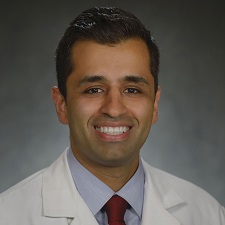
Anusha Kalbasi, MD
Project title
"IL13Ra2 Chimeric Antigen Receptor (CAR) T cells for metastatic melanoma"
Immune checkpoint inhibitors, a standard of care for metastatic melanoma, release the brakes on a patient's T cells, so they can attack a tumor. Some patients, however, relapse when resistance to treatment occurs. Dr. Kalbasi will lead a clinical trial to test a new immunotherapy treatment approach for patients with this deadly skin cancer, who did not respond to standard therapies. He will identify patients whose melanoma tumor cells express a protein called IL13Ra2. He will then collect the patient's immune T cells, engineer them to identify tumor cells that express the protein and reinfuse the T cells to kill tumor cells inside the patient. In contrast to immune checkpoint inhibitors that require regular intravenous doses, these engineered chimeric antigen receptor (CAR) T cells are a one-time treatment that theoretically protect the body for life. This clinical trial may also offer insights on how CAR T therapy overcomes tumor resistance mechanisms to treat patients with metastatic melanoma.
Institution
Stanford University School of Medicine
Sponsor(s) / Mentor(s)
Crystal L. Mackall, MD
Cancer type
Skin
Research area
Immunotherapy
Award Program
Clinical Investigator
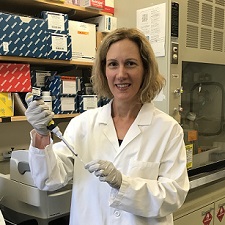
Birgit Knoechel, MD, PhD
Project title
"Mechanisms of CD8+ T-cell dysfunction and its therapeutic targeting in T-ALL"
Cancer cells harboring many genetic changes in their DNA often express novel proteins called neoantigens that activate the immune system to recognize and attack the tumor. Based on this mechanism, researchers are developing novel treatments to stimulate the immune system's response against a tumor, but this approach may not work for pediatric cancers that carry few genetic mutations. Dr. Knoechel's research is investigating alternative ways neoantigens can be generated, such as splicing or epigenetic changes, which occur frequently in leukemia and pediatric cancers. She is focusing on T-cell acute lymphoblastic leukemia (T-ALL), an aggressive blood malignancy in children and young adults that frequently stops responding to treatment causing relapse. Her research aims to identify mechanisms of immune "exhaustion" when T-cells stop fighting a tumor, define neoantigens generated by non-genetic mechanisms, and develop novel strategies to target non-genetic neoantigen expression. This research may lead to novel immunotherapy strategies for pediatric tumors.
Institution
Dana-Farber Cancer Institute
Sponsor(s) / Mentor(s)
Kimberly Stegmaier, MD, and Catherine J. Wu, MD
Cancer type
Blood
Pediatric
Research area
Immunotherapy
Award Program
Clinical Investigator
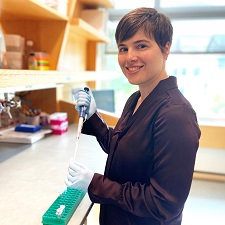
Yvonne M. Mowery, MD, PhD
Project title
"Evaluating and targeting pathways of treatment resistance in head and neck squamous cell carcinoma"
Head and neck cancers usually begin in the squamous cells that line the mucosal surfaces inside the mouth, nose and throat. Even with aggressive treatment including surgery, radiation therapy and chemotherapy, these tumors often recur with poor prognosis. Dr. Mowery will use patient samples and mouse models to investigate why these cancers are resistant to radiation treatment and to test new therapeutic approaches to improve outcomes for patients. She will also conduct a Phase 1 clinical trial to evaluate the effectiveness of using a combination of a radiation sensitizer (a drug that makes cancer cells more vulnerable to radiation therapy), radiation therapy and immunotherapy to treat patients with recurrent head and neck cancer.
Institution
University of Pittsburgh
Sponsor(s) / Mentor(s)
Heath D. Skinner, MD, PhD, and Robert L. Ferris, MD, PhD
Cancer type
Head and Neck Cancer
Research area
Animal Models/Mouse Models
Award Program
Clinical Investigator
Kelly L. Bolton, MD, PhD

Project title
"The use of ivosidenib in IDH1-mutated clonal cytopenia of undetermined significance"
Myeloid neoplasms (MN), including acute myeloid leukemia and myelodysplastic syndrome, are lethal blood cancers. The genetic mutations in the blood that lead to MN can occur years before diagnosis and maintain almost normal function before transformation. Certain mutations, including those in the gene IDH2, have been identified as high-risk for developing MN. Individuals with a reduction in the number of mature blood cells (cytopenias) who harbor acquired mutations in their blood, yet do not meet criteria for a cancer diagnosis, have a condition called cytopenias of undetermined significance (CCUS). These individuals almost invariably develop MN. Dr. Bolton will conduct a clinical trial to evaluate whether the IDH2 inhibitor enasidenib can be used as a therapy for CCUS. She will assess mechanisms of resistance and determine whether enasidenib can prevent the development of MN. This represents the first use of genetically targeted therapy for cancer prevention.
Institution
Washington University School of Medicine
Sponsor(s) / Mentor(s)
Matthew J. Walter, MD, and Eytan M. Stein, MD
Cancer type
Blood
Research area
Genomics
Award Program
Clinical Investigator
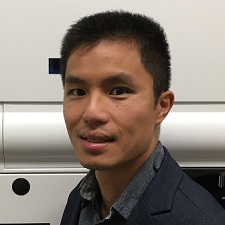
Alexander C. Huang, MD
Project title
"Shared antigen and neoantigen-specific T cells in checkpoint blockade efficacy and toxicity"
Immune checkpoint inhibitors (ICI), like anti-PD-1 therapy (αPD-1), have transformed clinical oncology by inducing long-term remissions, even in metastatic disease. However, fewer than 40% of cancer patients achieve such long-term remission with αPD-1, and immune-related toxicity limits more aggressive combined approaches, such as anti-PD1 and anti-CTLA-4 therapy. The question remains why a large portion of the immune response generated by combination immunotherapy is directed towards toxicity rather than anti-tumor immunity. A better understanding of the T-cell response to ICI is needed to develop safer and more effective treatment strategies. In humans, CD8+ T-cells are responsible for anti-tumor immunity. Dr. Huang is investigating the immune responses of different types of CD8+ T-cells to αPD-1 and whether they play a role in determining clinical efficacy and immune toxicity.
Institution
University of Pennsylvania
Sponsor(s) / Mentor(s)
Gerald P. Linette, MD, PhD
Cancer type
Skin
Research area
Immunotherapy
Award Program
Clinical Investigator
CONNECT
1.877.7CANCER
info@damonrunyon.org
One Exchange Plaza
55 Broadway, Suite 302
New York, NY 10006


